Weaving networks, bodies and economy: what we have achieved with the international projection of Metzineres merchandising
A few months ago, we embarked on an ambitious journey: we not only wanted to raise awareness of Metzineres’ values beyond our neighbourhood of Raval, but also to find sustainable sources of income that would allow us to continue supporting this community project over time, based on our own bodies, stories and resistance.
Metzineres was created to provide safe environments for women who use drugs and survive multiple forms of violence, helping them to regain confidence and collective support. With this reality, maintaining the tools that allow us to continue accompanying, caring for and weaving networks has always been a political and practical priority.
The project we are sharing today has not been a one-off task, but a collective construction that has involved reflection, listening, diagnosis and the implementation of processes that, until now, were not defined or systematised.
What have we achieved?
First, we have built a clear merchandising distribution strategy, focusing on the coherence between our feminist, community and anti-stigma values and economic operations. Because it is not about ‘selling for the sake of selling’, but about thinking about how to generate income without losing our voice or our purpose.
This plan did not come out of nowhere: it was developed from our internal discussions, from recognising our operational capacity, from knowing what we expect from the project and what we are not willing to do.
Gaining financial autonomy without losing sight of our goals
One of the clearest commitments of this project has been to break away from the idea of almost total dependence on subsidies or external support, and to move towards forms of income that arise from our relationships, our stories and our community aesthetic.
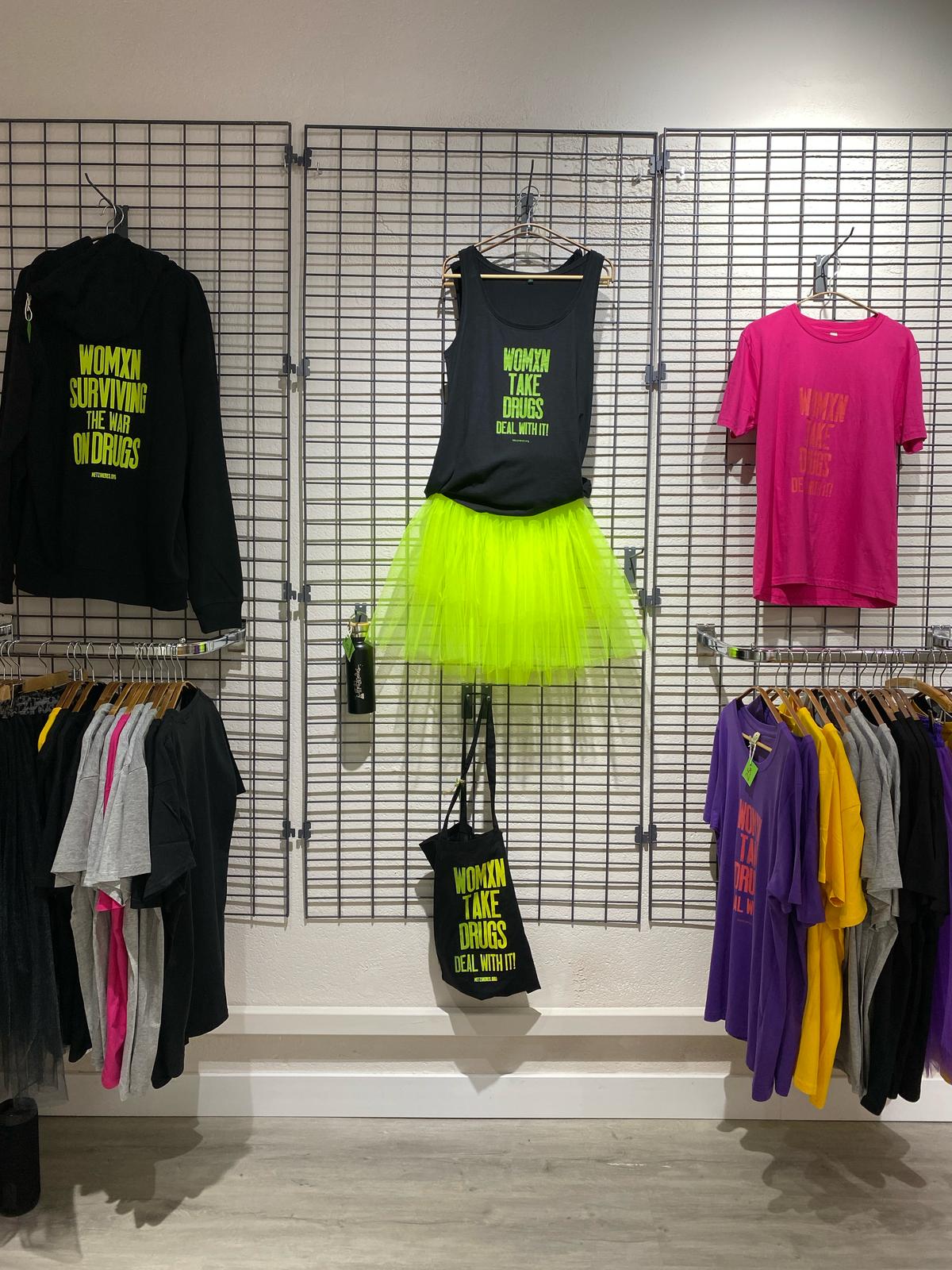
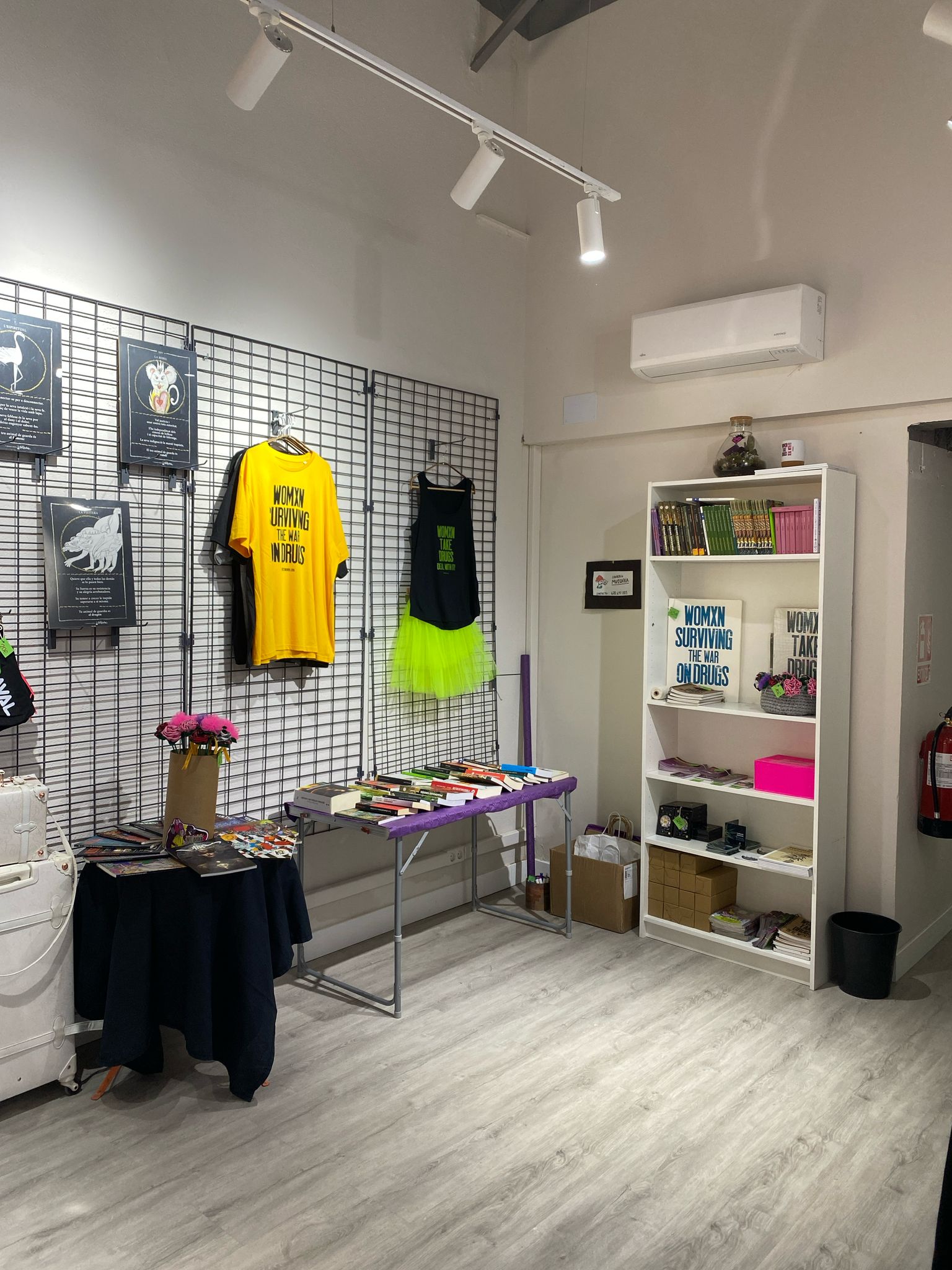
Merchandising—when well thought out—is not just an object to sell: it is a narrative tool. Every T-shirt, every tote bag, every product linked to Metzineres carries with it a story of resilience, of dialogue with stigma, of desire for social transformation. The fact that these objects are distributed, sold and enjoyed in broader contexts is also a way of making the invisible visible, of highlighting what is often left out of statistics and public policies.
At the same time, it allows us to begin to weave economic and symbolic networks beyond the Raval, connecting with collectives, shops and spaces that share our vision for change.
Beyond the numbers
Although part of the systematisation of this project requires us to account for sales, analyse channels and measure results, what really matters to us cannot be reduced to figures. What matters to us is that:
- the value of our collective work is recognised,
- the collective strength of people who, from the margins, generate their own transformative economic proposals is made visible,
- and that these proposals reinforce our practices of care, sisterhood and resistance.
This project has also taught us that the economy can be feminist and transformative when it is not only at the service of profit, but also at the service of life projects.
We continue to move forward, learning and expanding. Every time we see a product leave our hands and reach other hands, we feel that this gesture is an act of political visibility and emotional sustainability.