santjordi24_paradeta_capsalera

Re-signifying Sant Jordi from a Feminist Perspective: a Celebration of Resistance and Sisterhood

By Sophia Vargas

The Sant Jordi festival, deeply rooted in Catalan culture, has historically been celebrated as an event that commemorates love and culture through the exchange of books and roses. However, behind this seemingly innocent tradition lies a narrative deeply entrenched in patriarchy, perpetuating restrictive gender roles and systemic inequalities. In this sense, it becomes evident to us the urgent need to re-signify the celebration of Sant Jordi from a feminist perspective.

And that is precisely what we did at Metzineres: first, recognizing how the traditional story of Sant Jordi narrates the bravery of a man who saves a defenseless womxn from a fierce dragon, thereby reinforcing the notion that womxn need to be rescued by male heroes. This patriarchal narrative diminishes our capabilities and perpetuates unequal power schemes in which only men have the opportunity to be considered heroes.

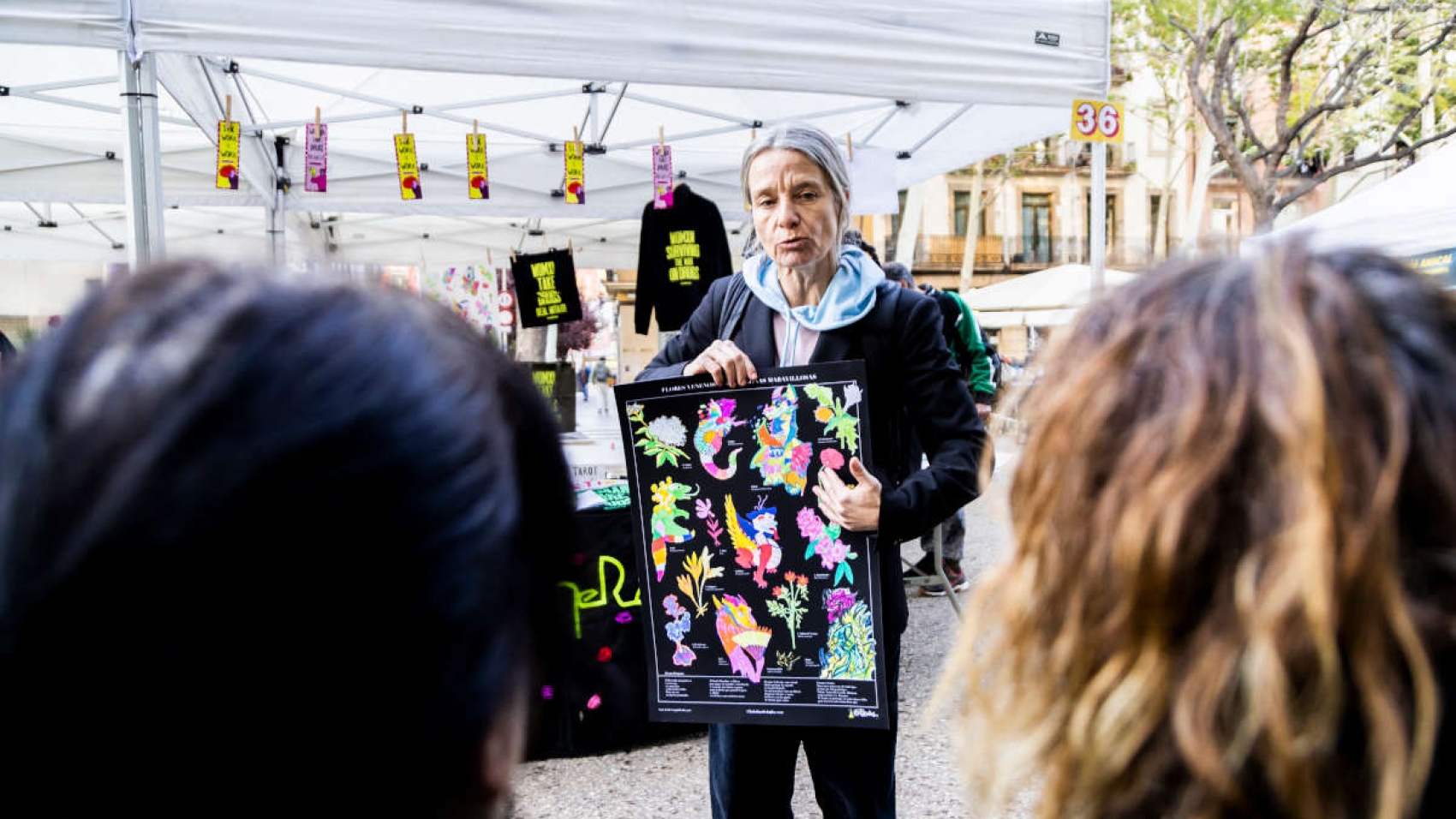
Therefore, it is so important for us to give new context and new meaning to this celebration by challenging traditional narratives and giving prominence to womxn, recognizing their agency and capacity to write their own stories. In our case, these stories turned into a visual poem, created by many Metzineres in the workshop “Visual Poems” led by the artist Christina Schultz. “Poema Dragona” was drawn, painted, and written by women and gender-diverse people who are victims of systemic violence. It stands as a powerful tool of resistance and empowerment for those who have found in this artistic expression a way to raise their voices and challenge patriarchal structures. This poem not only transforms the Sant Jordi festival but also helps amplify the voices that have historically been excluded and silenced.

By recognizing and denouncing the macho culture underlying this celebration, we empower ourselves and our bodies, actively challenge a system that perpetuates inequalities and violence, and re-signify this festivity as a symbolic act that consolidates a call to action to transform our realities and build a more equitable and just world for everyone.

To honor this new re-signification of Sant Jordi, we wrote a poem in honor of the dragoness Vibria and the princess. In this new story, the dragoness is not a monster to be feared but a force of nature that challenges the status quo and paves the way for a more equal and just future.

We refuse to accept the constant sacrifice of women in traditional stories, and instead, we reaffirm power, autonomy, and self-esteem. Inspired by legendary dragon names like Vibria, Saphira, Viserion, and Tiamat, we rewrote the story to reflect the strength and courage of women and gender-diverse people.

This workshop also brought with it a reinvention of the symbolism of flowers. Instead of settling for the traditional roses, we chose to represent a variety of plants that go beyond superficial beauty and have healing and medicinal properties. Elder, thorn apple, poppy, tree flower, rhododendron, pheasant’s eye, lady’s mantle, and autumn crocus.

But what is an opiate and how does it relate to our work? Flowers and their meanings are intrinsically linked to anti-prohibitionism. We are womxn who use drugs, challenging the prohibition policies that criminalize and marginalize us.

These plants not only have medicinal properties but also represent powerful metaphors for sisterhood and resistance. For example, elder, which cures coughs, symbolizes the importance of caring for each other. The poppy, an opiate that relieves pain, reminds us of the power of unity in the fight against oppression.

Why settle for a single symbol when there are so many plants that represent diversity and strength?

This process of interpretation and creation was collaborative and meaningful. Each part of the poem, from the dragons to the flowers, was drawn and written by a different Metzinere, demonstrating that together we can collectively build new realities and narratives. The final result, a poster that celebrates the diversity and empowerment of womxn, is now available for purchase, allowing this new version of Sant Jordi to reach a wider audience.

Photographs: Andre Gaetano, Metzineres Photographer.

 

lilafest24_cat

Metzineres rocking the stage (and the stigma) at LilaFest

By Sophia Vargas

Saturday, May 25, from 11:00 AM to 8:00 PM at Parc de l’Estació del Nord.

The Lila Fest is coming, a space to raise awareness, reflect, and fight against sexist violence! In its first edition, the festival is packed with actions and activities with a festive, playful, and cultural approach.

We will celebrate equality, social justice, and sisterhood, aiming to weave networks and build a more equitable future for all. It will be a day where we actively participate to recognize each other, share, celebrate, and create networks among all of us who build sustainable, dignified, and livable ways of life. Metzineres will use this space to dismantle the stigma surrounding womxn who use drugs, right on stage with Luana and Tania!

Luana, a Portuguese and Romani migrant and Metzinera, will participate in the festival presenting a fusion of sevillanas and zapateados that transcends flamenco stereotypes. Luana triumphantly emerges as a survivor of systematic violence from an early age, transforming these experiences into care for others, being compassionate and dedicated to others’ well-being. She is a joyful womxn with a great sense of humor and an impressive ability to constantly reinvent herself.

In addition to her singing and dancing skills, Luana excels in crafts, making jewelry, crocheting, and other creative expressions. The dress she will wear at the Lila Fest is designed, cut, and sewn by herself. Her commitment to the community is evident in her daily work as a community technician at Metzineres, as well as in her love for animals, especially her beloved dogs.

We will also have Tania on stage, a Spanish artist who will flood the agora with her improvisation and rap skills, with lyrics carrying reivindicative messages that challenge stereotypes and speak about the various forms of violence. Tania also excels as an illustrator, photographer, and music producer, creating her own tracks! Fearlessly, Tania raps meaningful rhymes that give voice to thousands of womxn, establishing herself as a significant figure in the fight against injustice and inequality.

Both artists have been rehearsing for weeks to showcase their talents at this festival, named after the lavender and mallow plants, symbols of leisure, festivity, and generosity. The festival will feature a wide variety of activities: shows, theater, dance, live music, workshops, conversations, debates, exhibitions, and food stalls.

We will also have the participation of our director and founder, Aura Roig, in “Radio LilaFest,” the live recording space for programs and podcasts with the Barcelona Community Radio Network and Torre Jussana. A space to listen, talk, and converse with diverse radio hosts, professionals, and activists of the feminist movement.

The festival will have a purple point for advice, support, and intervention in any case of violence, reaffirming the festival’s commitment to being a safe and accessible space for everyone.

Save the date for Lila Fest in your calendar and join us! See you on Saturday, May 25, from 11:00 AM to 8:00 PM at Parc de l’Estació del Nord in Barcelona. Follow all the news and updates about the festival on our social media.

You will find all schedules, participants, and relevant information in the program.

Photographs: Andre Gaetano, Metzineres Photographer.

santjordi24_capsalera

Redefining Sant Jordi: a Chronicle of Resistance and Sisterhood

By Sophia Vargas

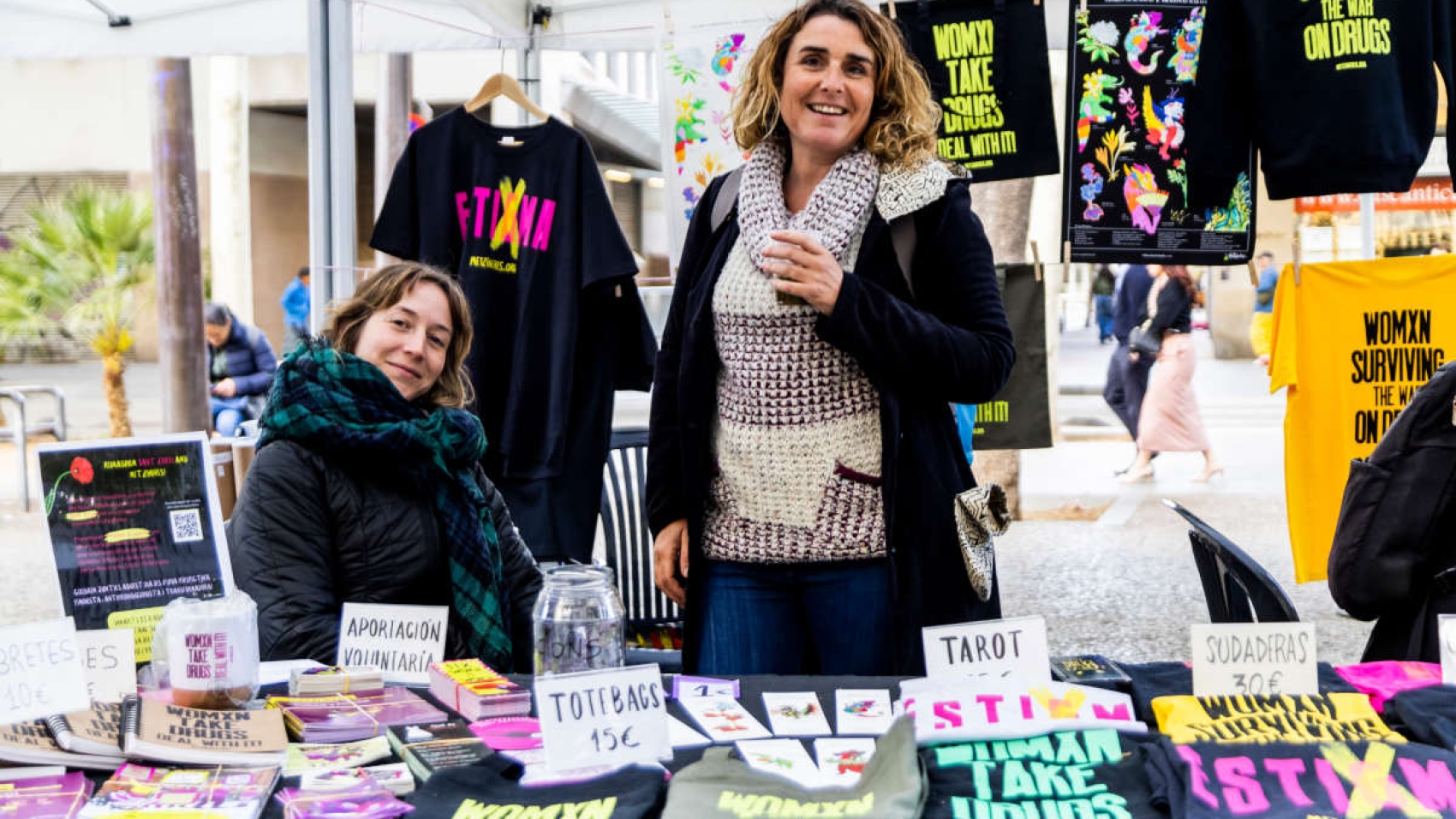
In the bustling streets of Barcelona, on April 23rd, Sant Jordi’s Day took on a different hue this year, especially at the Metzineres stand. What began as a traditional day of exchanging books and roses quickly transformed into a powerful platform of resistance and sisterhood.

The legend of Sant Jordi, with its deeply ingrained patriarchal narrative, served as the starting point for a profound reflection for us. Who was Sant Jordi really? What did the dragon signify in this story? And why were flowers limited to just roses?

The answers to these questions served as a catalyst for a process of deconstructing established narratives. The Metzineres challenged the patriarchal gaze underlying the celebration of Sant Jordi and explored new forms of representation.

We replaced traditional roses with a variety of flowers representing the diversity and strength of womxn. Elderflower, jimsonweed, poppy, and other plants became symbols of empowerment and self-care, challenging the idea that only roses could represent womxn.

All these ideas were brought up in one of our collective drawing and poetry workshops led by the artist Christina Schultz, where we brought our visions of dragons and flowers to life. Each head, each tail, each body was created by a different womxn, symbolizing everyone’s capacity to collectively build new realities.

It was a journey of weeks where we collectively created drawings and words that brought the dragon Vibria and the “Dragon Poem” to life, which was the protagonist of this activity. Every stroke, every detail, was a testament to the transformative power of artistic expression and collective resistance, culminating in the creation of a poster.

Sant Jordi’s event was much more than a commemoration; it was an affirmation of our identities and a declaration of intent to build a world where all womxn are seen, heard, and valued in all their diversity and strength.

Photographs: Andre Gaetano, Metzineres Photographer.


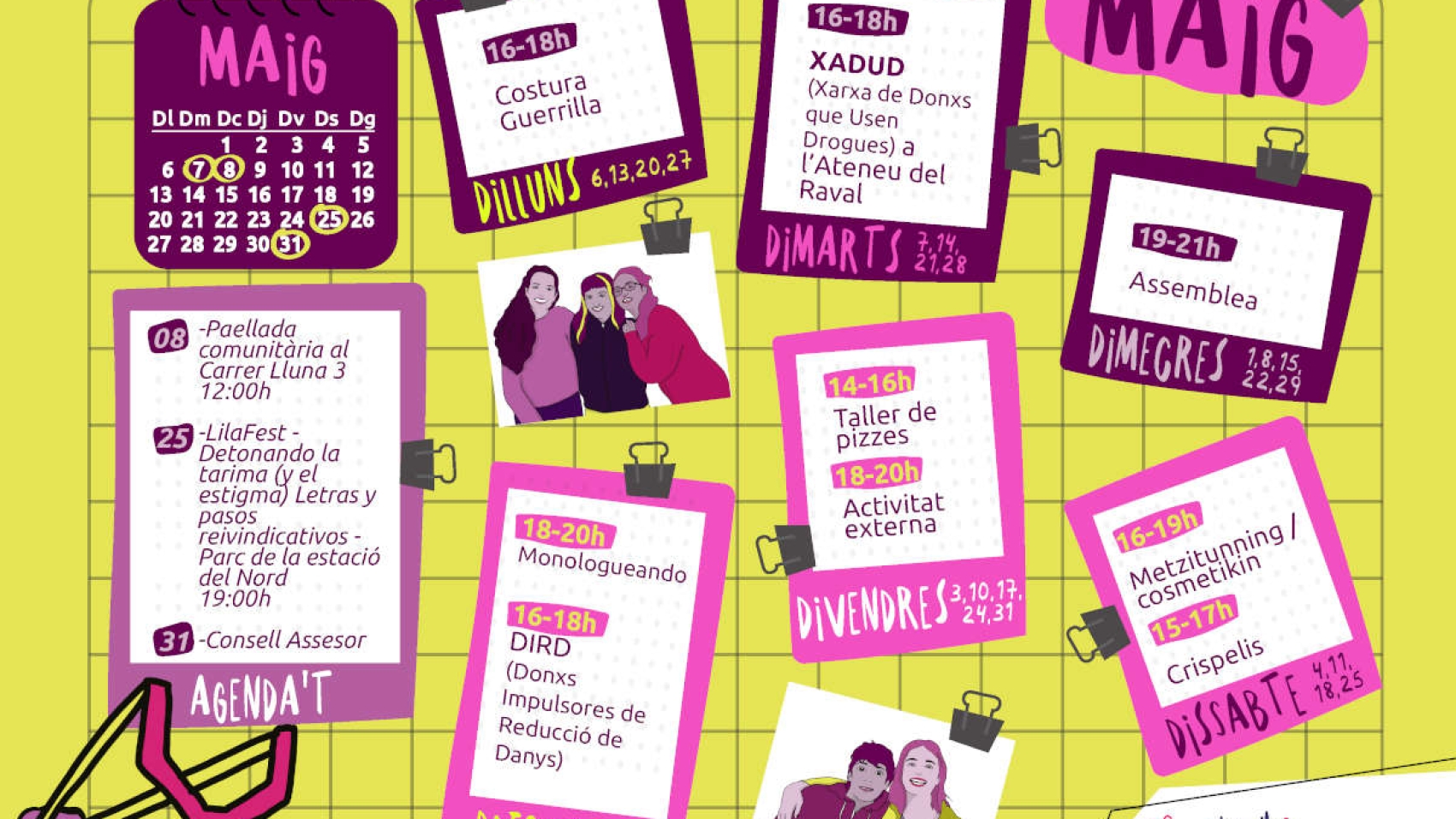
metziagenda_maig24_cat

MetziAgenda Mayo

Activitats exclusives per a les participants de Metzineres:

  • Costura guerrilla amb @franche_puntada.libre i @sindillar
  • Reunions de la XADUD (Xarxa de Donxs que Usen Drogues), a l’@ateneudelraval
  • Assemblea
  • Reunions DIRD (Donxs Impulsors de Reducció de Danys)
  • Monologuejant amb @viddapriego
  • Dinar comunitari
  • Excursions i sortides
  • Kosmetikin: Taller de cosmètica natural
  • Metzituning: Ens posem guapxs junts!
  • Taller de pizzes

 
Aquestes són les activitats especials de Maig:

  • Apunta’t-hi!
  • Dimecres 08: Paella comunitària al Carrer Lluna 3 a les 12:00h
  • Dissabte 25: LilaFest – Detonant l’escenari (i l’estigma) Lletres i passos reivindicatius – al Parc de l’estació del Nord a les 19:00h
  • Divendres 31: Consell assessor

A més, sempre disponible:

  • MetziSpa
  • Taller de Naloxona express
  • Acompanyament sanitari, social i educatiu
  • Dormir durant el dia
  • Roba, dutxa i rentadora
  • Ordinadors i Internet
  • ArtiSana: Espai d’artteràpia

Horari:

  • Dilluns, dimecres, dijous, divendres* i dissabte de 14 a 21h.
  • Dimarts de 18 a 21h.
  • Diumenge tancat.

*Divendres a partir de les 18h: sortides culturals i excursions!

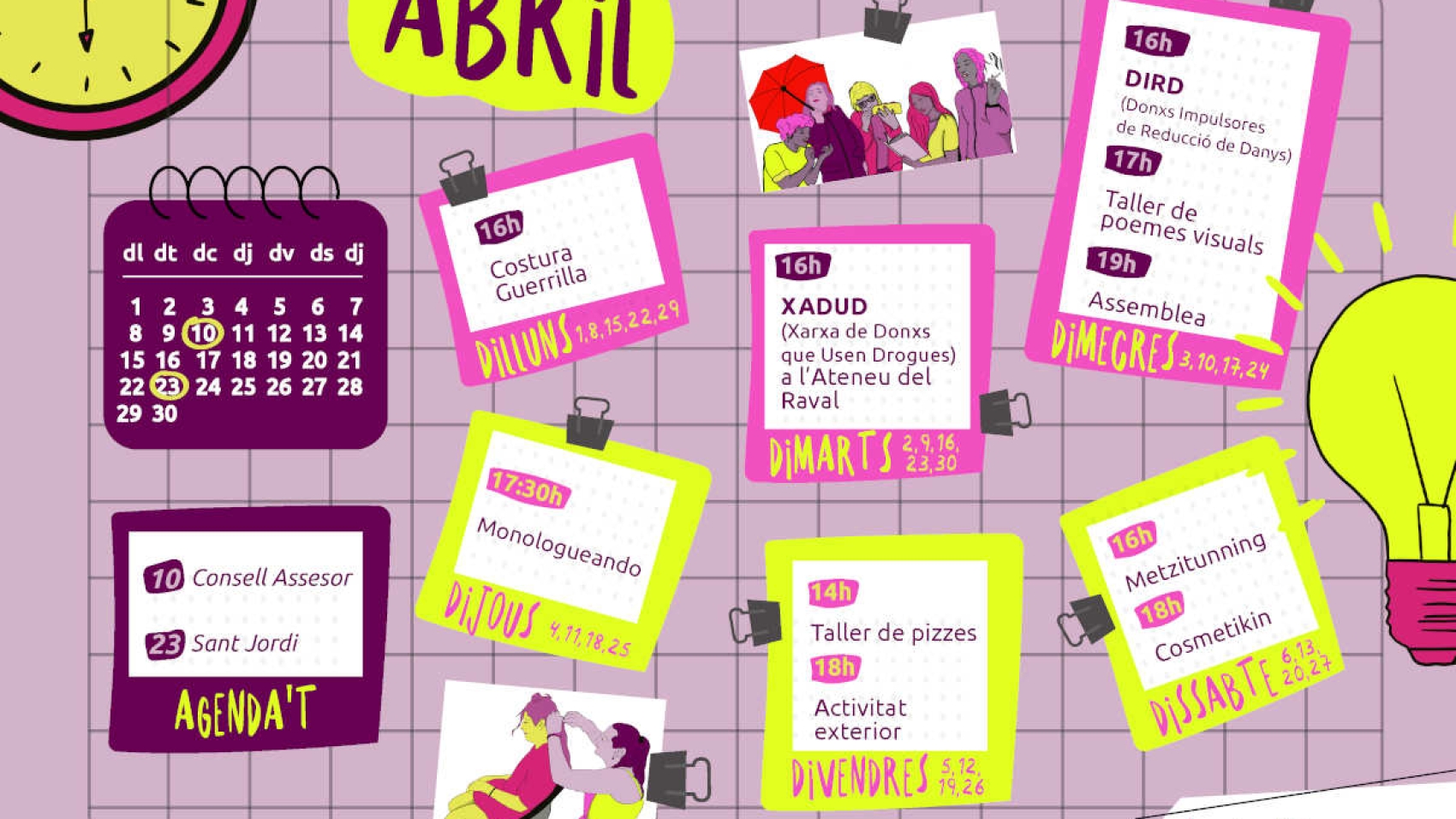
metziagenda_abril24_cat

MetziAgenda Abril

Ja tenim aquí la MetziAgenda de Abril!

Aquestes són exclusives per a les participants de Metzineres:

  • Costura guerrilla amb @franche_puntada.libre i @sindillar
  • Reunions de la XADUD (Xarxa de Donxs que Usen Drogues), a l’@ateneudelraval
  • Assemblea
  • Reunions DIRD (Donxs Impulsores de Reducció de Danys)
  • Monologueando amb @viddapriego
  • Taller de poemes visuals amb @schultz_and_more
  • Dinar comunitari
  • Excursions i sortides
  • Kosmetikin: Taller de cosmètica natural
  • Metzituning: Ens posem guapxs junxs!
  • Taller de pizzes

Aquestes són les activitats especials de Març:

  • Dimecres 10: Sant Jordi
  • Dimarts 23:Consell Asessor

Agenda’t!

A més, sempre disponible:

  • MetziSpa
  • Taller de Naloxona express
  • Acompanyament sanitari, social i educatiu
  • Dormir de dia
  • Rober, dutxa i rentadora
  • Ordinadors i Internet
  • ArtiSana: Espai d’artteràpia

Horari:

  • Dilluns, dimecres, dijous, divendres* i dissabte de 14 a 21h.
  • Dimarts de 18 a 21h.
  • Diumenge tancat.

*Divendres a partir de les 18h: sortides culturals i excursions!

#metziagenda

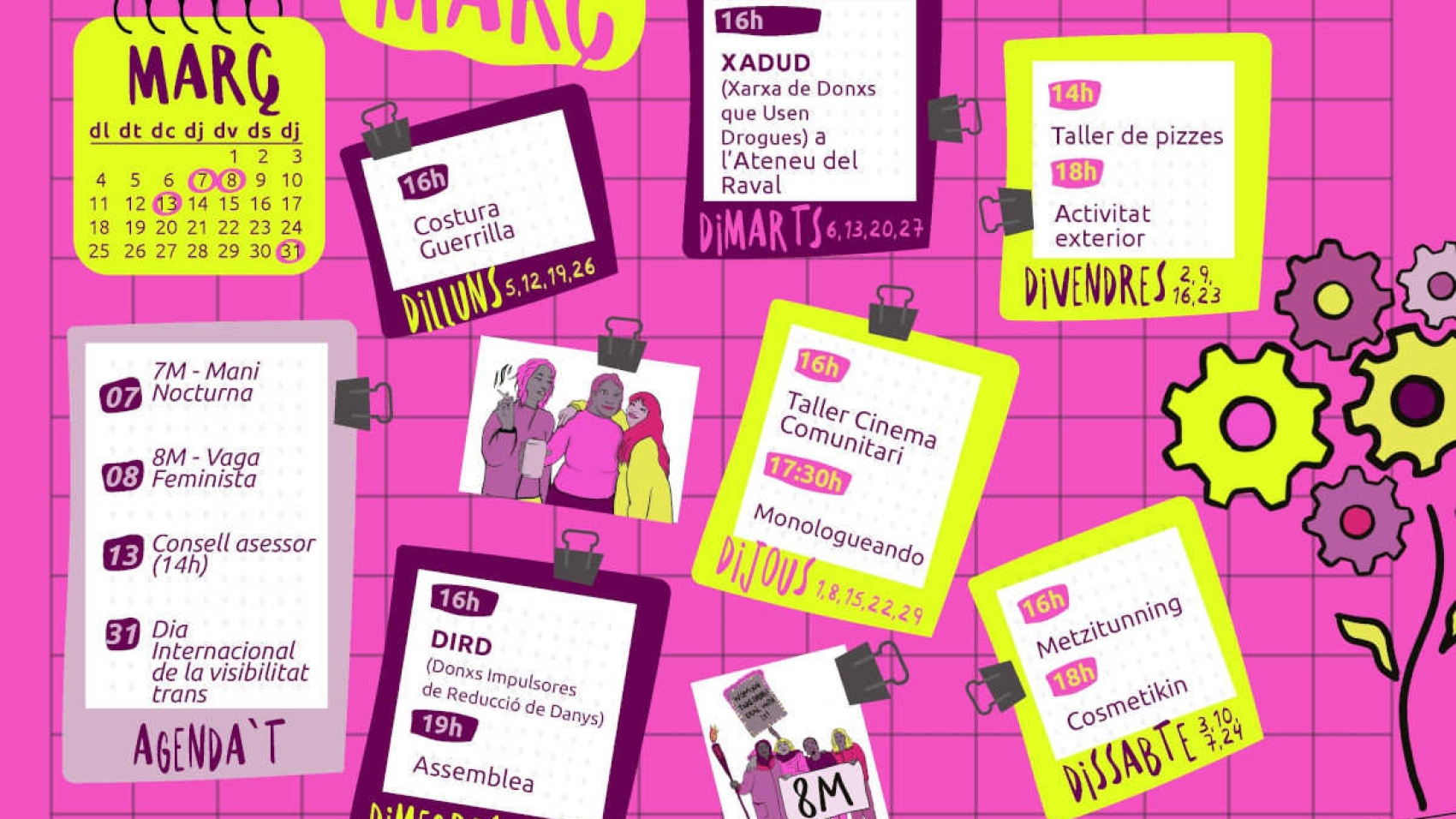
metziagenda_marc24_cat

Metziagenda of March 2024

Weekly activities calendar for participants of Metzineres. This month we have:

Guerrilla sewing with Franche PuntadaLibre and Sindillar
XADUD meetings (Network of People Using Drugs) at Ateneu del Raval
Assembly
DIRD meetings (Directors of Harm Reduction Initiatives)
Community lunch
External activity: Outings and excursions
Kosmetikin: Natural cosmetics workshop
Metzituning: Let’s get dolled up together!
Monologueando: Workshop with Vidda Priego
Pizza workshop

Special activities for February:

Wednesday 10th: Advisory Council
Tuesday 23rd: Saint George’s Day

Additionally, always available:

MetziSpa
Express Naloxone workshop
Health, social, and educational support
Daytime rest
Shower, laundry, and clothes
Computers and internet access
ArtiSana: Art therapy space

Schedule:

Monday, Wednesday, Thursday, Friday* and Saturday from 2 pm to 9 pm
Tuesday from 6 pm to 9 pm
Closed on Sunday
*On Fridays, starting at 6 pm, we will have outings and excursions outside the premises!

Address of Metzineres premises:
Carrer de la Lluna, 3
Raval neighborhood (Barcelona)

Address of Àgora Juan Andrés Benítez:
Carrer de l’Aurora, 13
Raval neighborhood (Barcelona)

macba_expo24_collages_capsalera

Metzineres Conquer the MACBA

Women and gender-diverse individuals facing situations of violence and vulnerability are not commonly invited to exhibit at city museums. Museums, like other cultural spaces, often remain inaccessible and out of reach for those of us existing outside the margins of a conventional society.

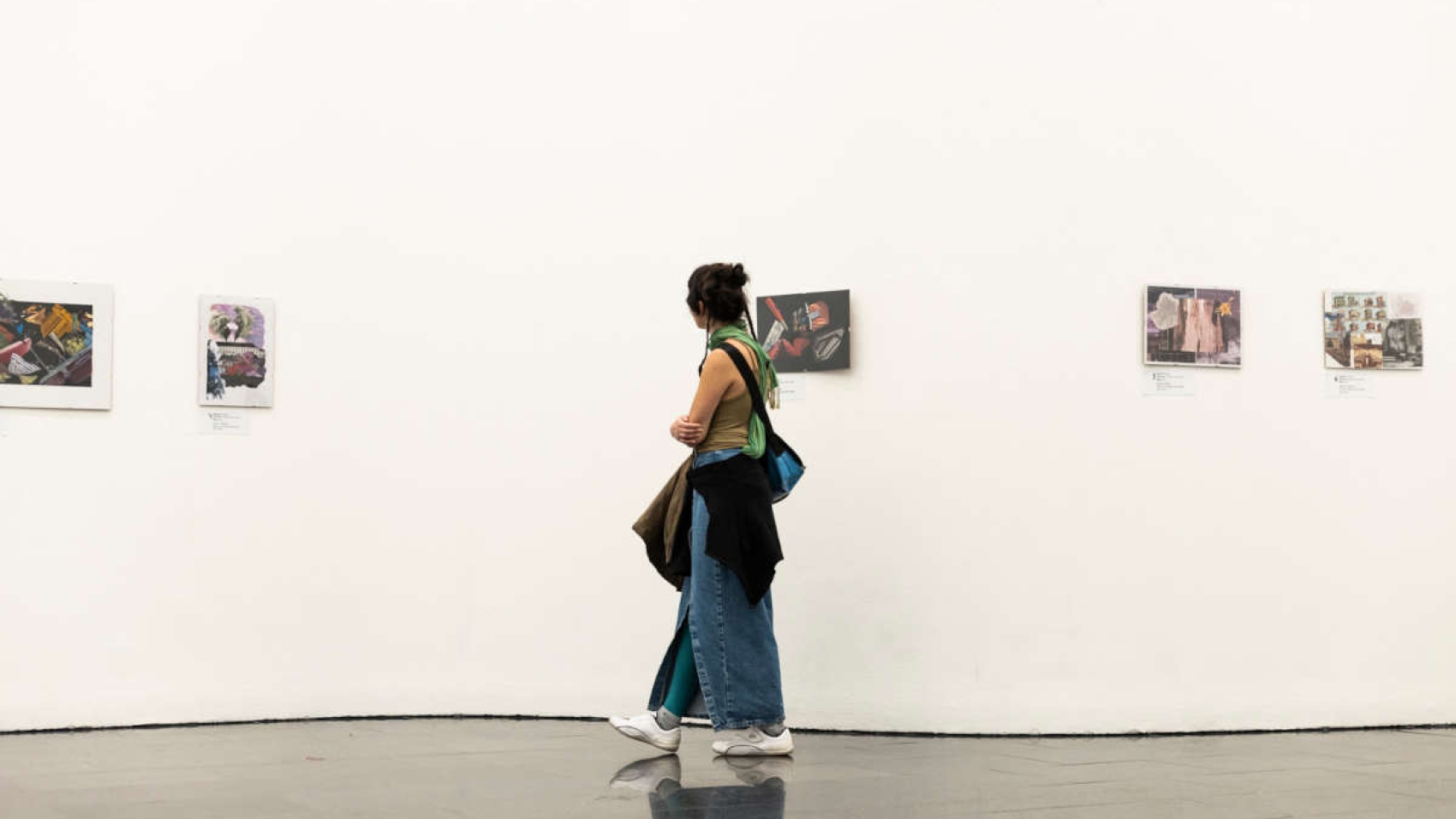
At Metzineres, we continuously seek out the cracks in the system through which we can sneak in. Thanks to the years of skill and determination, on February 21st, twelve works created by the Metzineres were displayed on the walls of the tower of the Museum of Contemporary Art of Barcelona (MACBA) for an entire day. Pretty cool, right?

Passersby, some by chance and friends we had invited, stared attentively for a long while. The pieces conveyed various ways of imagining a possible and utopian Raval, our neighborhood—a unique place where our existences are not constantly questioned and criminalized, as is the case elsewhere.

The artworks were admired, photographed, and praised. Some of us were there to witness it firsthand. We were thrilled and pleasantly surprised by this recognition, and it simultaneously gave us the strength to keep dreaming big. “From here to the MOMA!”—as one of our colleagues exclaimed while laughing, referring to the Museum of Modern Art in New York.

This exhibition became possible within the framework of the exhibition ‘108 Days’ by the artist Lydia Ourahmame. It is a large, participative, and vindicative work in which 108 collectives participated (one per day) with various proposals, including talks, films, performances, and other actions.

Hopefully, one day an event like this will not be considered an act of subversion and resistance. Hopefully, it will become entirely normal for people like us to express our feelings through any form of art and share them with the world, having finally managed to decolonize and depatriarchalize these spaces.”

Photos by Andre Gaetano [Metzineres Photographer]

metziagenda_febrer24_cat

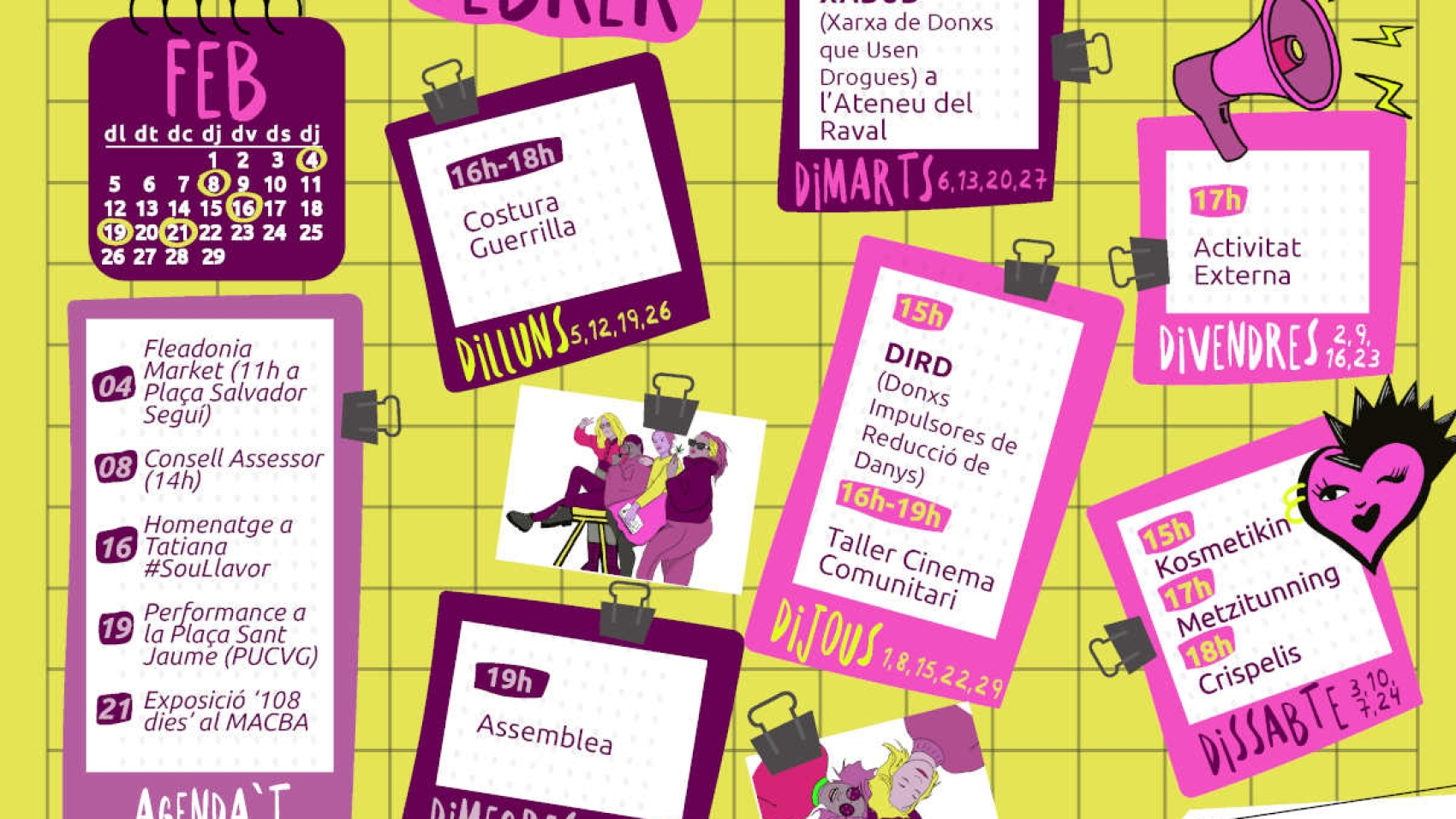
MetziAgenda of February 2024

Weekly activity calendar for Metzineres participants. This month we have:

  • Guerrilla sewing with Franche PuntadaLibre and Sindillar
  • Meetings of the XADUD (Network of Womxn who Use Drugs), at Ateneu del Raval
  • Assembly
  • Community meal
  • DIRD Meetings (Womxn Promoters of Harm Reduction)
  • Community cinema workshop with Ateneu del Raval
  • Outings and excursions
  • Kosmetikin: Natural cosmetics workshop
  • Metzituning: Let’s get pretty together!
  • Crispelis: Movies and popcorn!

February special activities:

  • Sunday 4: MetziParadita at Fleadonia Market
  • Thursday 8: Advisory Council
  • Friday 16: Tribute to Tatiana #SouLlavor
  • Monday 19: Performance at Plaça Sant Jaume (PUCVG)
  • Wednesday 21: Exhibition ‘108 dies’ at MACBA

Also, always available:

  • MetziSpa
  • Express Naloxona Workshop
  • Health, social and educational support
  • Daydream
  • Clothing, shower and washing machine
  • Computers and Internet
  • ArtiSana: Art-therapy space

Opening hours:

  • Monday, Wednesday, Thursday, *Friday and Saturday from 14 to 21h
  • Tuesday 18 to 21h
  • Sunday is closed

*Friday from 18h: outings and excursions!

Metzineres’ site address:
Carrer de la Lluna, 3
Raval (Barcelona)

Address of the Ágora Juan Andrés Benítez:
Carrer de l’Aurora, 13
Barri del Raval (Barcelona)


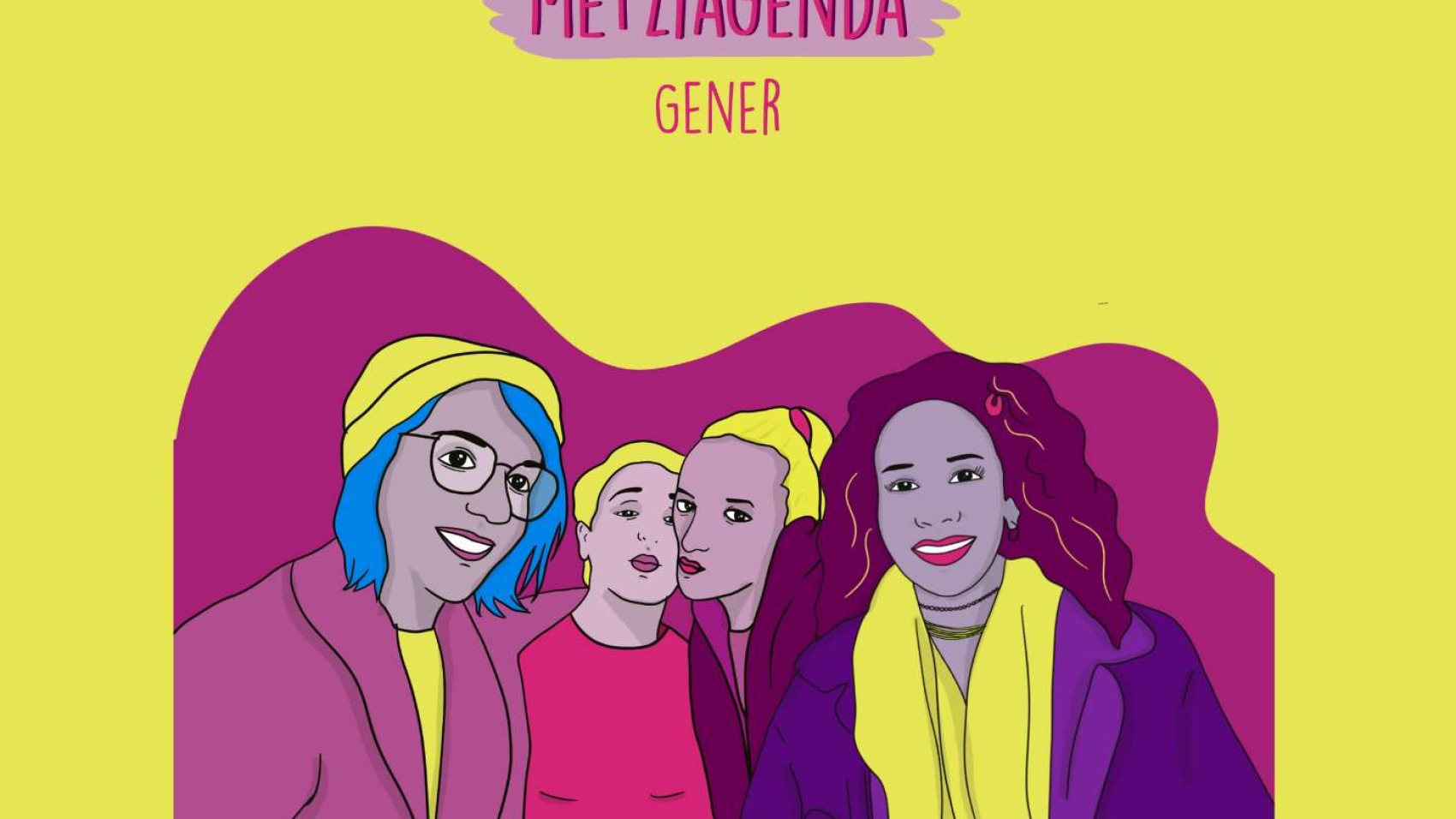
calendario_agenda_enero_2024__1_

Metziagenda of january 2024

Weekly activity calendar for Metzineres participants. This month we have:

  • Guerrilla sewing with Franche PuntadaLibre and Sindillar
  • Meetings of the XADUD (Network of Womxn who Use Drugs), at Ateneu del Raval
  • Assembly
  • Community meal
  • DIRD Meetings (Womxn Promoters of Harm Reduction)
  • Community cinema workshop with Ateneu del Raval
  • Outings and excursions
  • Kosmetikin: Natural cosmetics workshop
  • Metzituning: Let’s get pretty together!
  • Crispelis: Movies and popcorn!

January special activities:

  • Sunday 7: MetziParadita at Fleadonia Market

Also, always available:

  • MetziSpa
  • Express Naloxona Workshop
  • Health, social and educational support
  • Daydream
  • Clothing, shower and washing machine
  • Computers and Internet
  • ArtiSana: Art-therapy space

Opening hours:

  • Monday, Wednesday, Thursday, *Friday and Saturday from 14 to 21h
  • Tuesday 18 to 21h
  • Sunday is closed

*Friday from 18h: outings and excursions!

Metzineres’ site address:
Carrer de la Lluna, 3
Raval (Barcelona)

Address of the Ágora Juan Andrés Benítez:
Carrer de l’Aurora, 13
Barri del Raval (Barcelona)

mani_25n

Deviant and visible against sexist violence

As women who use drugs, we are 25 times more likely than others to experience violence. Various conditions of vulnerability, such as living without a home, having unstable income, or living with mental health diagnoses often push us to the fringes of society, where we endure the daily oppression stemming from this patriarchal, racist, colonial, and LGBTQIphobic system.

It’s as if almost 100 years hadn’t passed, for our current situation is far too similar to that of the women incarcerated by the “Patronato de Protección a la Mujer“ (“Women’s Protection Board”). A francoist institution operating under the Ministry of Justice, the “Women’s Protection Board” used religious doctrines to manage centers of repression between 1941 to 1984. Young women and girls between 16 and 25 years old were sent there for “immoral” conduct, which included things like kissing in public, walking hand in hand with one another, smoking, dressing in a certain way, having been sexually assaulted, etc.

Far from offering protection, the “Women’s Protection Board” was the place where women were sent when they were seen to be “bad apples” who had gone astray, women who dared to defy the status quo, women who were free. These women could have been us, and in fact… we are them. Because while these institutions may have changed their names, they remain governed by the same powers with the same objective: to control our bodies through oppression, violence, and prohibition.

For these reasons, at Metzineres we have once again taken to the streets for the International Day for the Elimination of Violence Against Women. We believe it absolutely necessary to keep denouncing the discrimination, stigmatization, and criminalization that we face. We must make historical memory using a feminist perspective that, among other things, demands reparations from the institutions complicit in the existence and crimes committed by the “Women’s Protection Board.”

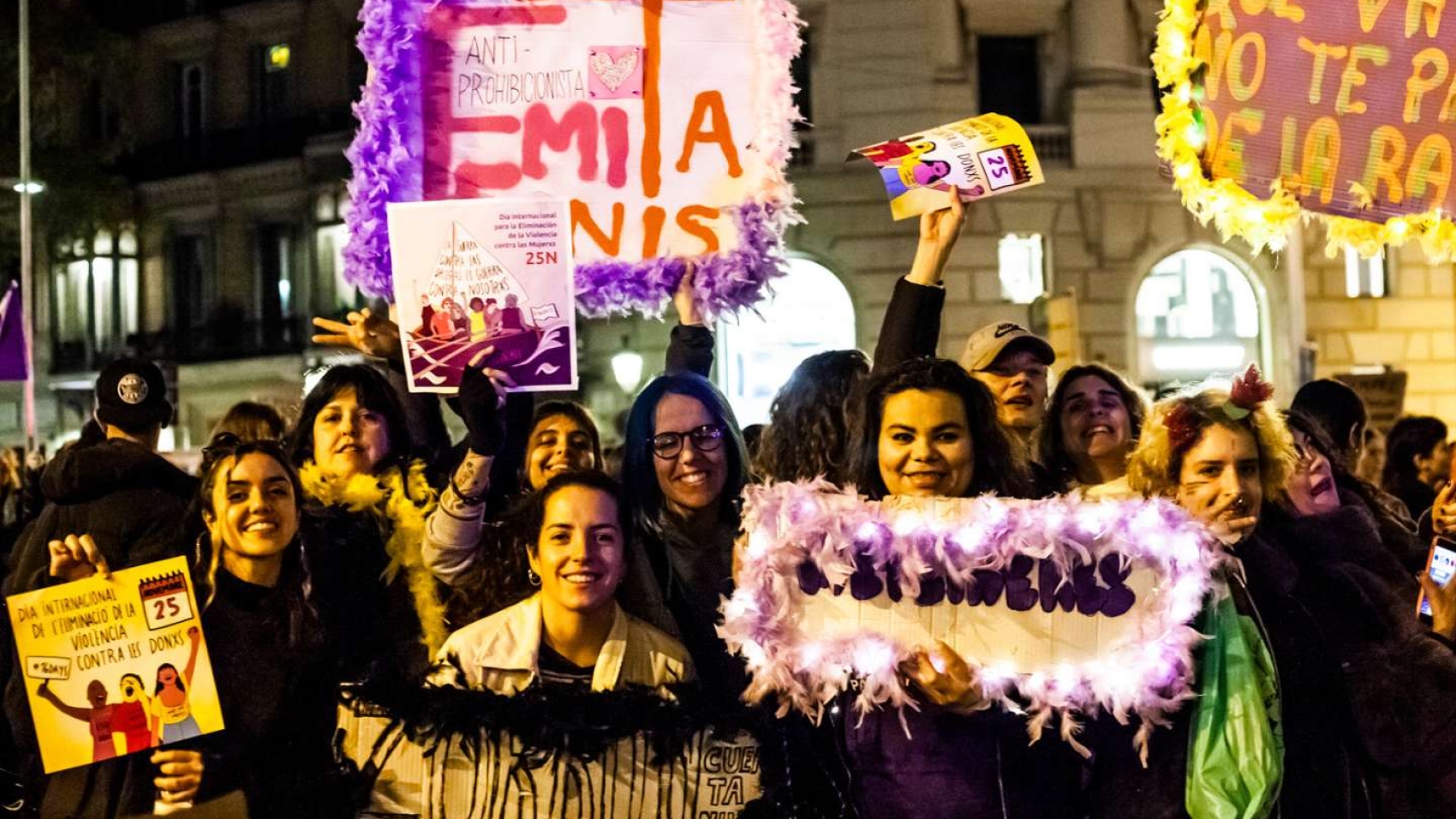
This 2023, we protested with our faces exposed; we didn’t wear masks or disguises. Because we want to be seen. We will no longer hide. For it is enough that the States and governments exclude us from their services, like health, social, judicial, labor, and housing services; that the media dehumanizes us and makes us invisible behind numbers and headlines; and that a large part of society treats us like delinquents, bad womxn, bad daughters, and bad mothers.

If we have one thing clear it’s that we will never again stay in the shadows: there are many of us, and we have names and diverse lived realities that need to be brought to light. And so, on the 24th and 25th of November, with our lights and our signs we stepped out into the open. We made ourselves heard, shouting once again that we are anti-prohibition feminists. Throughout history, we have been (and continue to be) forbidden from doing many things: studying, managing our money, dancing, kissing each other in public, smoking, drinking and using other drugs, having an abortion… and what we have found is that far from helping to educate and discipline, prohibition only leads to secrecy, disinformation, and violence.

Following many years of work, we are now organized and can fight together, like we did on Saturday, November 25th, the International Day for the Elimination of Violence Against Women. After gathering at the door of our locale to read the manifesto (link) we recently published through the campaign #EVAWUD2023, we headed towards the Paseo de Gracia con Diagonal.

Dancing through feathers, we were an intergenerational mass of people. We do not always have the opportunity to make our presence known and to occupy certain spaces because we are busy trying to survive. Our presence there was a way to put various demands on the table: our participation in creating, developing, and monitoring the politics that affect our lives; a guaranteed access to systems that protect and denounce violence against women, as well as for sexual and reproductive healththe end of prohibition and criminalizationthe expansion of “full spectrum harm reduction,” a perspective that deconstructs falsities about substance use and places focus on the exclusion and marginalization that don’t allow wellbeing to those who are vulnerable.

On both days, we heard proclamations from our Palestinian comrades. Among others, “Queers in Palestine” called for solidarity from intersectional feminist groups and that we show up for them and their resistance the same as with all decolonial struggles in the world. Other comrades talked of voluntary motherhood and parenting, denouncing custody losses, calling for the abolition of the immigration law, and asking that Metzineres join them, as well.

All in all, we can say that we have put our heart and soul into fighting for what we deserve. But, above all, we have kept celebrating (and will continue celebrating) that we are alive, together, and strong, and that no one can stop us!