August 31 is International Overdose Awareness Day.
What is happening in our territories in the face of this public health crisis?
According to the Spanish Observatory on Drugs and Addictions (OEDA), in 2020, in the whole State, 974 deaths directly related to an overdose were reported.
In Catalan prisons, overdoses accounted for 11.4% of all deaths.
Since 2011, 60 overdose deaths have been reported in the prison setting, from which we must still demand much more to guarantee the most basic human rights.
On the other hand, outside the prison setting, in the supervised consumption rooms in Catalonia, 176 overdoses have been reversed in 2021 alone.
Overdose deaths are caused by public policies based on the prohibition of some substances and the criminalization of consumers, which leads to social isolation, vulnerability, stigmatization, marginalization and ignorance. In addition, prohibition maintains a monopoly of products in the market without quality control.
For all these reasons, as we do every year, we join this international campaign to raise awareness of one of the worst public health crises in the world, to stimulate action and debate on overdose prevention, to commemorate the people we have lost along the way, and also to remember that these have been unjust and avoidable deaths.
Join us on this day of remembrance and vindication by joining the rally:
August 31, 2023
18.00h
Plaça Sant Jaume.
Convene: CATNPUD – Xarxa de persones que usen drogues
And all the entities that are part of it: ARSU, Asaupam, AUPA’M, Àmbit Prevenció, CatFAC, DonARSU TOT, Episteme, FAAAT-FDM, ICEERS, Metzineres, REMA and XADUD.
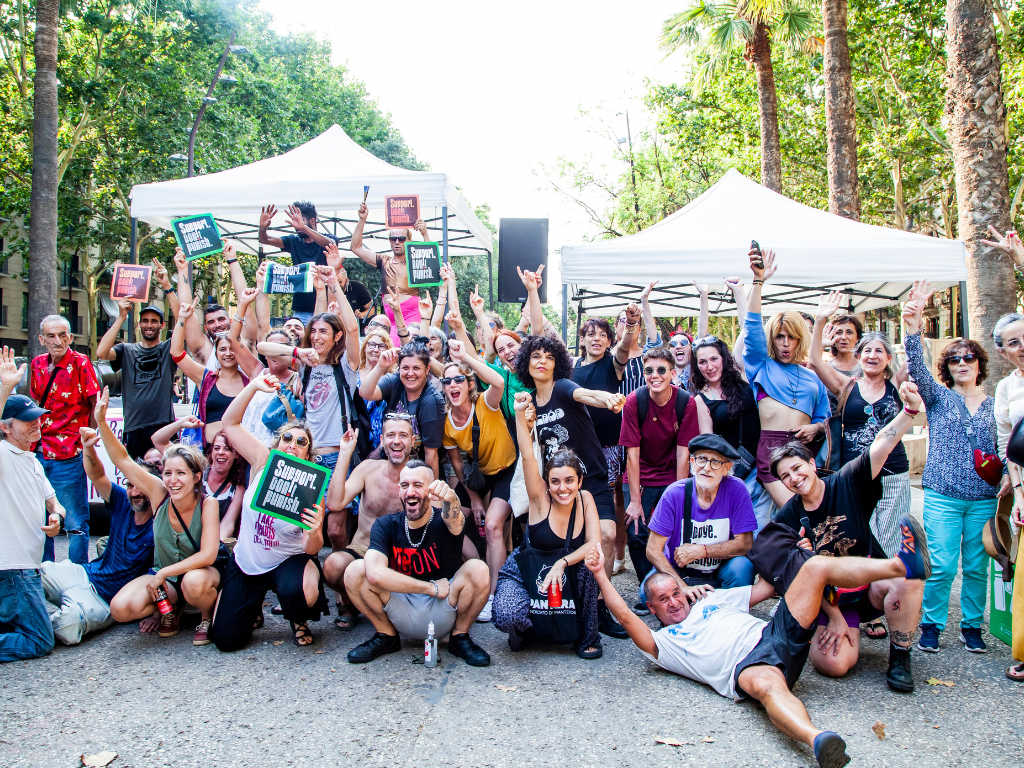
For many people, last Monday was not any old Monday. For the 10th consecutive year, June 26th was recognized in calendars around the world as the International ‘Support. Don’t Punish’ Day. This year, it was celebrated in 91 countries and 275 cities.
But…what exactly is ‘Support. Don’t Punish’ all about? A global advocacy campaign, it calls for drug policies based on health, well-being, and human rights, as well as the abolition of prohibitionist drug laws which lead to stigma and criminalization of people who use drugs.
Who wants to be a millionaire anti-prohibitionist?
Despite the intense heat, dozens of people gathered at the Rambla del Raval at noon to celebrate this special day together. With a presence and energy, for another year anti-prohibitionist organizations and activists from around Cataluña showcased the commitment and unity of this community network via CATNPUD (the Catalan Network of People Who Use Drugs).
Starting the competition! – Photo: Andre Gaetano.
The day kicked off under the tent, with the reading of the manifesto that outlined some of the principal objectives of Cataluña’s 2023 campaign. They included, for one, defending the sustainability of the Servicio de Adicciones y Salud Mental del Hospital Sant Joan de Reus (the Addiction and Mental Health Services at the Hospital Sant Joan de Reus)– created using a holistic risk and harm reduction framework— as well as recognizing the work of Dr Tre Borràs–recently let go from her position as director there.
Additionally, the manifesto highlighted the cannabis user and grower associations (CSC), a Catalan model replicated internationally that responds to risks associated with using cannabis from the illegal market. Its future is currently at risk due to the changing political climate in the whole territory.
However, as we always say, “there is no revolution without feathers and glitter”. For this reason, the day’s calls to action were accompanied by an atmosphere of partying and celebration in the public space– a space that also belongs to us and where we once again wanted to make ourselves visible. In the same way, in the ‘Anti-Prohibitionist Olympics’, participants worked in teams to compete in three events (‘Who wants to be a millionaire anti-prohibitionist?’, ‘Lysergic Painting’ and ‘Outlandish Improvisations’), demonstrating their knowledge and skills of themes related to the campaign and the world of substances: it was a game show-worthy scene.
The Voice of People Who Use Drugs
Throughout the whole day, neighbors from el Raval came to join us, along with other passersby, who were curious and asked what was happening in this space where there was a stage, music, signs and, above all, laughter. Also present were representatives and participants from the organizing groups: CATNPUD, Metzineres, ARSU, XADUD, Asaupam, CatFAC, ConFAC, Episteme Social, REMA, ICEERS, AUPA’M, Dona Arsu Tot and Fundació Àmbit Prevenció.
All these organizations, furthermore, are signers of the manifesto where we denounce “the current macropolitics of health which are putting at risk the sustainability of the networks and structures that permit this kind of community refuge. As well as the risks inherent in the sanitary and client models that seek to make public health ‘efficient’ in Cataluña”.
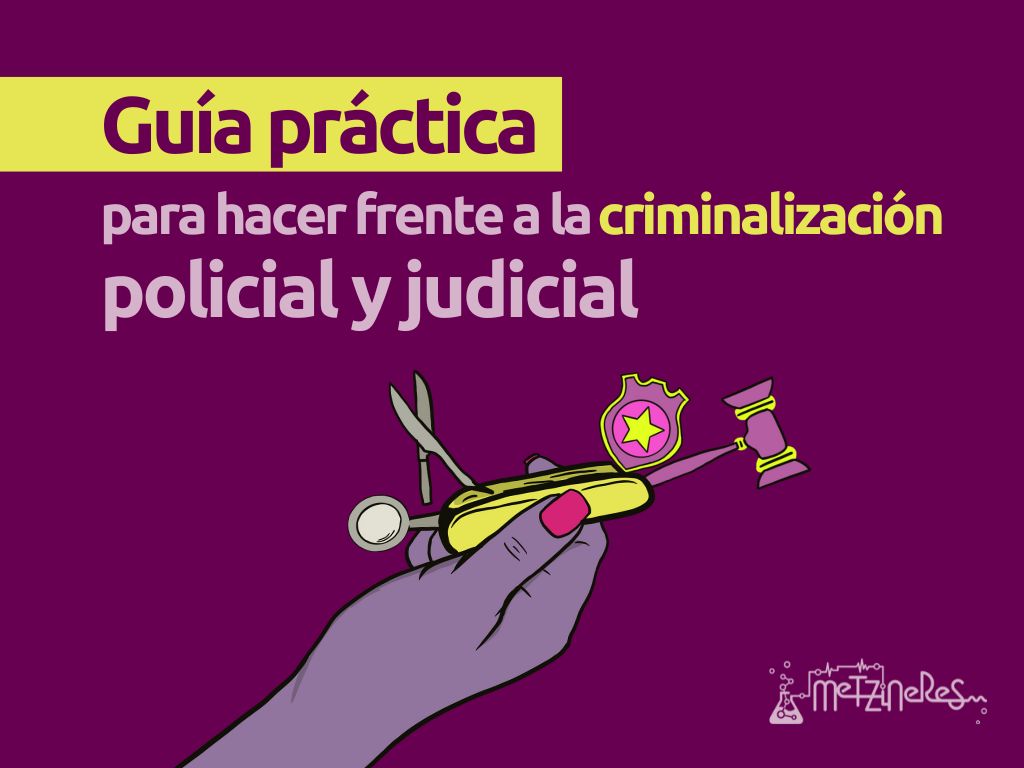
Alongside a delicious meal, Metzineres’ director Aura Roig and lawyer Marta Valldaura presented the ‘Guia pràctica per fer front a la criminalització policial i judicial’. Its impetus, they explained, came from concerns and questions voiced by Metzineres’ participants. The guide aims to provide information on the protected rights of people in situations of vulnerability and violence. It also offers practical tools to more easily navigate certain interactions with the police and judicial system.
Of course, the radio was there. On this occasion, we listened to a live episode of ‘El lado oscuro del Raval’ (The Dark Side of el Raval) by members of Fundación Àmbit Prevenció. The episode brought together various testimonies from people who use drugs, who came to the table to talk and share experiences that they go through in their daily lives.
Nevertheless, one of the most anticipated moments of the day was yet to come. Following Vidda Priego’s marvelous autobiographical monologue that scandalized more than one about her reality as a trans bisexual person, DJ MariKarmen Free turned our spot on the Rambla del Raval into a small oasis, where we danced, sang, and jumped and where diversity and intersectionality were the protagonists. It was the grand finale to an unforgettable day of revelry, action, and sisterhood.
An International Success Story, in Danger
The very next day on June 27th, the Hospital Sant Joan de Reus hosted a photography exhibit called ‘Amb Cara de Dona’: a journey through the stories of the members of Dona Arsu Tot –an entity belonging to ARSU (Asociación A Reus Som Útiles). The organization was created in 1999 with the aim of accompanying people using drugs affected by a lack of social support as well as other negative consequences derived from prohibitionist politics.
This time, the manifesto was read at the hospital’s front entrance. Canal Reus TV was present, as well as other groups and activists who came in support of Dr. Tre Borràs and to denounce the injustice being faced by the hospital’s Servicio de Adicciones y Salud Mental.
The text was another reminder of the principal demands: to abolish all drug laws based on penal control; to repair the harms inflicted upon communities by prohibition; to promote a market regulation based on the rights of consumers, not corporate interests. All the while, we proclaimed: “We defend the sustainability of the Reus Model and all harm reduction projects that address the social gaps that those in power insist on maintaining and reproducing”.
‘Support. Don’t Punish’ is a global awareness campaign advocating for health and human rights-based drug policies, which is celebrated every year around 26 June.
Thousands of people and organisations who are building sustainable alternatives to the war on drugs will be calling for an end to prohibition, stigma and criminalisation of people who use drugs. As in past years, we expect our efforts to shine in more than 200 cities of more than 80 countries around the world!
This year in Catalonia we have prepared two days of #SupportDontPunish:
Monday, 26 June Rambla del Raval
From 12h:
Anti-prohibitionist Olympics, broadcasted by the great MariKarmenFree!
Community lunch
Presentation of the new ‘Practical guide to confront police and judicial criminalisation’ by Metzineres
Radio programme ‘El lado oscuro del Raval: Especial 26J’ with Àmbit Prevenció
Monologue by the unique and incomparable Vidda Priego
Fun music with MariKarmenFree!
Tuesday, 27th June Hospital Sant Joan de Reus
At 12h:
Photographic exhibition ‘Con Cara de Mujer’, with the stories of the participants of ‘La Isleta’, members of Arsu Reus, our wonderful companions of Dona Arsu Todo!
Manifesto reading
Afterwards, community meal at the Municipal Swimming Pools of Reus (C/ de la Ginesta, 20)!
Come and enjoy with us this day of protest and solidarity with a bit of mischief and humour!
Organisers/Participants: Arsu Reus, Metzineres, CATNPUD, Dona Arsu Tot, Asaupam, AUPA’M, Àmbit Prevenció, REMA, XADUD, CatFAC, Iceers, ConFAC i Espisteme Social.
Las personas que usan drogas y que se encuentran en múltiples situaciones de vulnerabilidad, difícilmente entran o adhieren a los sistemas de atención sociosanitaria, quedan fuera del mercado laboral formal y no disponen de vivienda estable.
Sinhogarismo, experiencia migratoria y/o situación administrativa irregular, falta de ingresos económicos, LGTBIQ+, ejercicio del trabajo sexual, entre otros, provocan interconectadas formas de discriminación, prejuicio y estigma. Todo esto deriva en una vulneración sistemática de sus derechos.
Lejos de ofrecer alternativas óptimas adecuadas a las diversas realidades de las personas que garanticen su acceso a derechos, a menudo el Estado articula sus respuestas desde los mecanismos de control policiales y judiciales, criminalizando a los colectivos más vulnerabilizados y agravando desigualdades y injusticia social. Lo hacen a través de las sanciones administrativas por consumo o posesión en el espacio público, la criminalización del trabajo sexual o de otras formas de subsistencia que quedan fuera del mercado laboral reglado.
El endurecimiento de las penas en los delitos económicos leves y los delitos relacionados con drogas, entre otras, son algunas de las respuestas que impactan de forma desproporcionada y contribuyen a cronificar situaciones de exclusión.
Sin hogar estable ni teléfono, la falta por parte de la administración de canales de entrada y comunicación adecuados a sus circunstancias provoca que a menudo no se garantice el acceso a la información relativa a los procedimientos administrativos o judiciales que tienen abiertos, abocándolas a una gran indefensión.
Con el objetivo de facilitar la navegación por el sistema policial y judicial, esta guía quiere dar a conocer los derechos que nos amparan y dotar de algunas herramientas prácticas que faciliten encarar determinadas actuaciones policiales y judiciales.
Su contenido se ha elaborado en base a algunas de las inquietudes y dudas que las mujeres y personas de género diverso participantes de Metzineres han ido trasladando en el día a día.
Un material elaborado por Metzineres en el marco de las subvenciones para el desarrollo de proyectos de defensa, fomento y divulgación de los derechos civiles y políticos de la Dirección General para la Promoción y Defensa de los Derechos Humanos del Departamento de Igualdad y Feminismos.
Report presented at the 85th Session of the Committee on the Elimination of Discrimination against Women (CEDAW)
This report describes the situation of women and gender diverse people who use drugs and survive multiple situations of violence and vulnerability in Spain. It was prepared by Metzineres and the International Drug Policy Consortium (IDPC). Our director, Aura Roig, had the opportunity to present a brief summary (video available in English, French, Chinese and Spanish):
Information provided is based on research conducted by civil society organizations and official sources. The 435 participants of Metzineres have also provided their testimony, which has been systematized through our own database, along with indicators based on the elements that are important to them.
We examined the interconnected situations of vulnerability, multiple discriminations, and violations of rights that they endure: problems related to drug use, homelessness, sex work or sex for survival, migration experience and/or irregular administrative situations, mental health problems, violence, criminalization, etc. There are severe barriers to accessing social and health care networks, the drug addiction networks, and domestic violence networks, as well as the Spanish justice system itself.
The policies implemented by the State to date are insufficient to address this issue. It is imperative that immediate measures are taken in order to ensure their protection, adequate support, access to rights, and to end their criminalization.
We ask the Committee to urge the Government of Spain to adopt reasonable measures to eliminate the systematic discrimination, criminalization and violence suffered by women and gender diverse people who use drugs and are in multiple and interconnected situations of vulnerability.