Dust, Streets, and Knowledge

Self-care and Strategies of Sex Workers Who Use Drugs

Metzineres has launched a project that centers the voices of sex workers who use drugs and survive multiple forms of violence and vulnerability. The project, titled “Survival and Harm Reduction Strategies in Sex Work”,  has been a community-driven, collaborative process to co-create a guidance tool based on lived experience — developed both as a detailed report and as an accessible guide — with the support of researcher Livia Motterle.

It all began in July 2024, with preparatory training sessions, fieldwork, research, diagnostics, interviews, and neighborhood meetings. Gradually, informal conversations, weekly assemblies at the Metzineres space, and even a community paella became spaces of listening and trust. From this process, 20 in-depth interviews emerged.

The result was a 100+ page document of analysis, reflection, and survival and resistance strategies — far exceeding our expectations. It places the experience of sex workers themselves at the center of knowledge production (to be used in actions and/or public policies that, in turn, will help make their rights effective). The first presentation and feedback session for this process took place during this year’s Festes del Raval as a way to begin raising awareness, fostering dialogue, and encouraging advocacy.

Likewise, the draft of the final practical guide was presented at Arravalera — a community, cultural, anti-prohibitionist, and transfeminist space also promoted by Metzineres — which gathers real strategies of survival and harm reduction, defending the rights of sex workers. This is a material co-created with and for them, which continues to strengthen the network of mutual support and community resistance in the Raval.

With the support of the Barcelona City Council – Directorate of Feminisms and LGTBI of the Department of Culture, Education, Sports, and Life Cycles.

Captura de Pantalla 2026-02-20 a las 14.42.jpg

MetziBaila: bodies that dance, voices that resist

At Metzineres, we understand feminism as a living, situated, and transformative practice. A feminism built from the margins, from the experiences of women who survive multiple forms of violence, stigma, and exclusion. It is within this framework that MetziBaila was born: a community-based creative project that places the body, dance, and performance at the heart of political and collective action.

You can see a summary of MetziBaila

Here

A process that goes beyond the stage

MetziBaila has not been just a performative piece. Above all, it has been a process. A space for coming together, building cohesion, and listening, both for the staff team and for the women participating in Metzineres’ sheltering environments.

Initially, the project envisaged a series of sessions to co-create and present a public piece as part of a global advocacy action. However, internal changes within the team, new staff members joining, and unforeseen circumstances led us to rethink our timing and priorities. True to our flexible and adaptive model, we decided to reshape the project and place it on a symbolic date: 8 March 2025, International Women’s Day and a day of feminist struggle.

This decision was not merely logistical. It was political. We wanted the action to engage with a context that speaks directly to our realities and to allow us to advocate from a feminist, anti-prohibitionist, anti-racist, and human rights-based perspective.


First stage: caring for the team, inhabiting the body

The first phase of the project focused on internal work with the professionals at Metzineres. Over four sessions, we created a space that was different from the everyday work environment: a space to set the body in motion, explore tensions, share emotional impacts, and strengthen the cohesion of a team that had recently undergone changes.

Participants described this process as “powerful.” It allowed us to (re)discover one another, create a different kind of dialogue — not only verbal, but embodied — and open up more intimate spaces for collective care.

During these sessions, the foundations of the performance piece also began to take shape: lyrics, movements, structure. But, as with everything at Metzineres, nothing was set in stone.

Second stage: creating with women, not for women

The second phase brought in women participating in Metzineres. Participation was voluntary and based on their own motivations and desires. And that changed everything.

The initial proposal had to be reworked. It was too long, too complex, and did not fully resonate with them. Through dialogue and assembly-based discussion, the lyrics and movements were simplified, making them shorter, more accessible, and more visually powerful. The aim was to create an action that was clear, direct, and easy to learn, taking into account the complexity of their lives.

As part of this process, we also opened up a critical reflection on possible similarities with other global feminist performances. Rather than ignoring this, we chose to reformulate the piece to ensure that the action was genuinely our own, situated in our context, and consistent with the Metzineres collective. This process of analysis and revision became a valuable form of community learning.

7M: taking over the streets from the margins

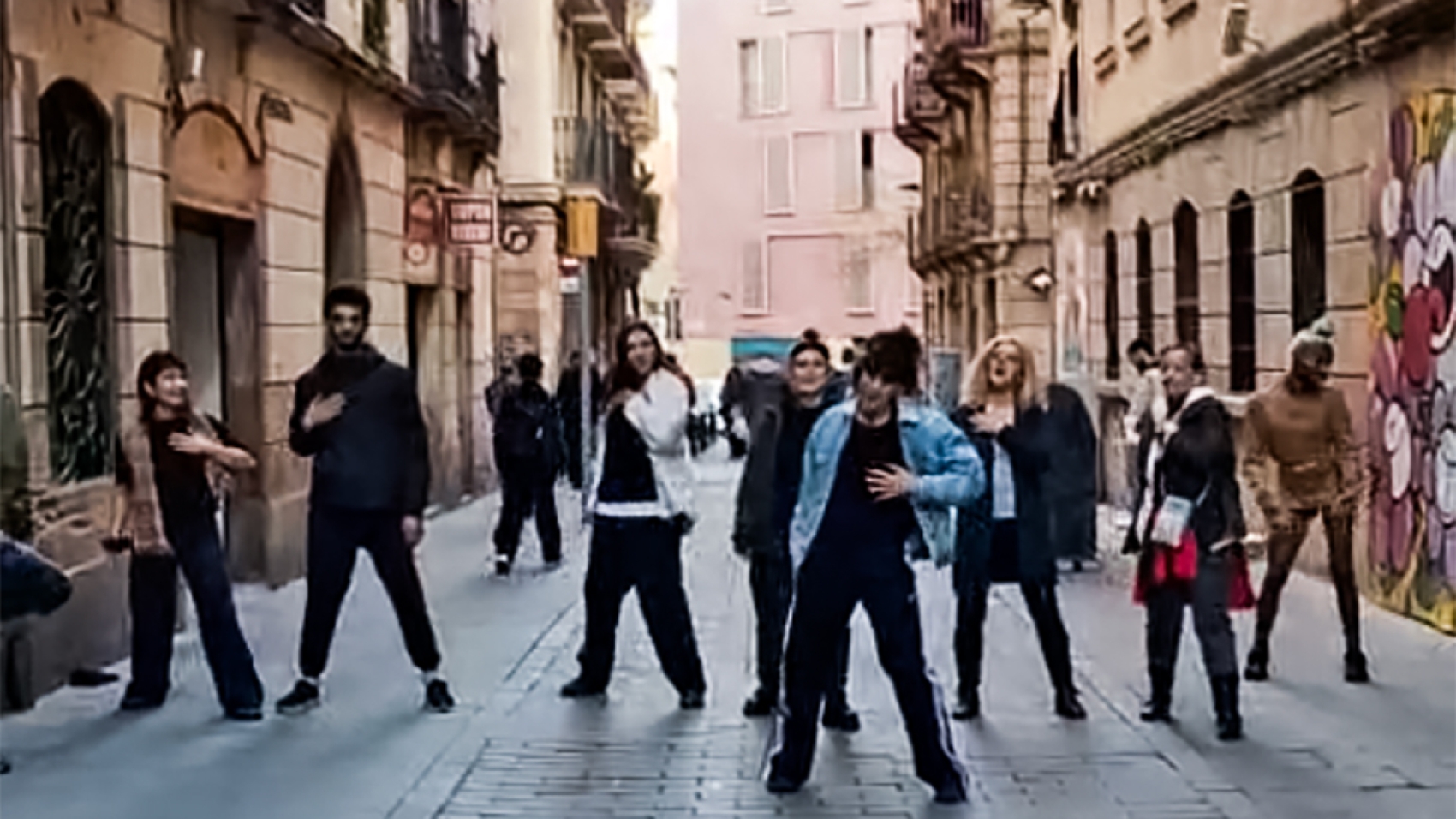
The performance action finally took place on 7 March, as part of the nighttime demonstration held ahead of 8M, with the participation of both women and staff members from the organisation.

There was strong agreement that not performing on the official 8M stage was the right decision. Instead, the action took place in a space that participants felt was more their own, less crowded, and less exposing. This strengthened their sense of identification and belonging.

The performance was brief but powerful: feminist, anti-stigma, anti-racist, anti-colonial, and anti-punitive. It was a way of saying that women who use drugs, who survive homelessness, forced migration, sex work, imprisonment, or mental health struggles are also political subjects. And that their voices matter.

Weaving alliances, building community

MetziBaila also created bridges with other local actors, such as the Barceloneta Civic Centre, expanding community-based and artistic work across neighbourhoods. The project showed that, even amid constant changes and reformulations, it is possible to build inclusive community networks and make visible the structural discrimination affecting the women we support.

Impact and continuity

MetziBaila leaves us with clear lessons: the importance of flexibility, genuine listening, situated creation, and placing life at the centre. It reaffirms our belief that art can be a tool for care, protest, and transformation.

Because when bodies move together, when voices intertwine, and when a community recognises itself, feminism ceases to be only a discourse and becomes a living practice.

With the support of

Metzineres at HR25: We Didn’t Ask for a Seat—We Built a New Table

The Harm Reduction International Conference 2025 “Sowing change for harvesting justice” held in Bogotá, Colombia became a vibrant space of political articulation, situated knowledge, and collective action. This year, Metzineres wasn’t just present — it disrupted, questioned, and reimagined the global paradigm of harm reduction.

From the very first day, our participation was powerful. Silvie Ojeda, our Director of Communications and Advocacy, brought the critical voice of oppressed communities in colonized territories to the opening plenary:   where Silvie shared the space with Sam Rivera as chair, Alí Bantú Ashanti from Colectivo Justicia Racial, Colombia, Kojo Koram from Birkbeck College, University of London, UK and Kokila Annamalai from  Transformative Justice Collective, Singapore. From the stage, she denounced how colonial structures uphold the war on drugs — a war that, through militarization, harms, excludes, and kills innocent lives with a disproportionate impact on racialized, impoverished people, women, and gender-expansive communities. Her intervention shook the audience and challenged them to rethink which bodies are considered worthy of public policy and which remain criminalized.

That same day, founding director Aura Roig spoke in a parallel session organized by UNODC, focusing on good practices that tackle gender-based violence against women and gender-expansive people who use drugs. With clarity and strength, she highlighted how institutional responses often reproduce more harm than care, asserting that harm reduction must also be a feminist tool against machista violence. On Tuesday, Aura spoke again in a central panel on gender perspectives in harm reduction, alongside international peers like Judy Chang and Wangari Kimemia. She positioned Metzineres’ intersectional, community-based approach as a disruptive alternative to dominant biomedical models — one where care is political, collective, and liberating.

Meanwhile, Silvie Ojeda participated in a special radio broadcast of “Dosis Mínima” hosted by Colombian media outlet Mutante, where she emphasized that beyond substances, it is exclusion and poverty that generate discrimination. Minutes later, she joined “Mujeres Psicoactivas,” led by RIA Institute of Mexico, where she explored how drug policies disproportionately impact women and gender-expansive people. In these spaces, communication became a radical act — where lived experiences and collective reflections echoed truths rarely given a microphone.

In the afternoon, Metzineres took part in two critical events. At a dialogue organized by the Government of Colombia and chaired by Alexander Rivera from the minister of Justice, called Broad-spectrum harm reduction: what is it, how does it take shape, and what challenges does it pose?” This space was key in strengthening the social approach of the Drug Policy, integrating social determinants, a gender perspective, intersectionality, and inclusion strategies. We exchanged experiences that helped consolidate a policy based on care, inclusion, and the reduction of vulnerabilities. We reunited with long-time friends like Liz Evans, Inés Elvira Mejía, and Sarah Evans, Ester Aranda and Jamel Lazic. Together, we shared a rights-based vision shaped by lived experience and local knowledge, stating that Harm reduction isn’t just about drugs—it’s about housing, racial justice, economic justice, and more. The limitations of viewing harm reduction as isolated strategies were also emphasized, especially considering that Colombia has a rich history of community work and centering people. In this sense, they will incorporate lessons learned from Europe, without repeating the same mistakes

Later, Aura chaired the session on drug consumption rooms where experiences from different territories shared insights for building advocacy strategies, alliances, and sustainable models that place users at the center of decision-making.

On Wednesday, Metzineres continued to bring strong presence. At a session hosted by IPPF and AWID on feminist approaches to sexual and reproductive health and rights, Silvie spoke about how our community weaves together desire, pleasure, harm reduction, and bodily sovereignty. She also presented data on the disproportionate impact of the war on drugs on women, girls, and gender-diverse people. Finally, in a session on the criminalization and police violence against Black women, Silvie firmly denounced the systemic violence endured by our sisters and called for radical, active, and committed solidarity with dignified life.

What Metzineres brought to HR25 wasn’t just participation — it was transformation. They challenged audiences to be braver. They demanded that harm reduction truly mean inclusion. They reminded the world that care is political — and that those most criminalized are also those most equipped to lead. In Bogotá, Metzineres didn’t ask for a seat at the table. They built a new one — and invited us all to sit, listen, and act.

At the Harm Reduction International Conference 2025, it was deeply affirming to see all major awards go to women whose tireless work has not only advanced the global harm reduction movement but has also directly nurtured and mentored Metzineres. Inés Elvira Mejía Motta’s unwavering dedication to building inclusive drug policy in Latin America has been a guiding force for our own advocacy, offering both strategic support and heartfelt encouragement over the years. Judy Chang’s fearless leadership in centering the voices of people who use drugs has inspired us to remain unapologetically bold in our demands for dignity and rights. Liz Evans, a pioneer in compassionate care, has shown us what it means to build with integrity, compassion, and long-term vision—reminding us always to place people at the center. And Sue Purchase, with her grassroots power and commitment to sisterhood through Harm Reduction Sisters, has shown us the strength of collective care and the transformative potential of feminist harm reduction in action. These awards are more than recognition—they are a tribute to the women who have lifted us up, walked beside us, and reminded us that another world is not only possible, but already in motion.

We invite you to view photos and videos from this inspiring journey.


Les Metzineres vam ser premiades per l'Observatori Català de la Justícia a Violència Machista

The Metzineres were awarded by the Catalan Observatory of Justice in Gender Violence

It is the award for the best initiative launched by a private entity: Entorno de derechos Casa Marianne.

Last November 27, the Metzineres attended the awards ceremony of the Catalan Observatory of Justice in Gender Violence (OCJVM) of the Generalitat de Catalunya of the year 2024, where we were awarded for our project “Environment of rights Casa Marianne”, highlighted for being an initiative aimed at the eradication of gender violence in the field of justice.

Casa Marianne is a legal shelter for women criminalized for surviving multiple situations of exclusion that seeks to reduce the impact of barriers to access to rights and provide tools to address the criminalization suffered by women and gender-diverse people who use drugs and survive multiple situations of violence and vulnerability.

From Metzineres we support their work by providing legal advice and support to the women participating in the project, as well as legal representation in those legal proceedings in which they do not have a public defender to represent them.

The awards of the Catalan Observatory of Justice in Gender Violence are given every year and are a way to recognize our work against gender violence and the patriarchal heteronormative system, and also a way to encourage us to continue on this path of building networks and support spaces for every woman who needs it.

Captura_de_Pantalla_2024_10_01_a_las_15.03.25

MetziAgenda october

Exclusive activities for Metzineres:

  • Guerrilla sewing
  • XADUD (Xarxa de Donxs que Usen Drogues) meetings at the Ateneo del Raval
  • Assembly
  • Monologueando
  • DIRD (Donxs Impulsores de Reducció de Danys) meetings
  • Pa’ella at MACBA
  • Kosmetikin: Natural cosmetics workshop
  • Metzituning: Let’s get pretty together!
  • Crispelis

These are the special activities for october:

Save your calendar!

  • Thursday 24: International Day for the Elimination of Colonialism

Also, always available:

  • MetziSpa
  • Express Naloxone Workshop
  • Health, social and educational support
  • Sleeping during the day
  • Clothes, shower and washing machine
  • Computers and Internet
  • ArtiSana: Art therapy space

Hours:

Monday, Wednesday, Thursday and Saturday from 2pm to 9pm.

Tuesday and Friday from 6pm to 9pm.

Closed on Sunday.

Ilustración_sin_título 6

Womxn experiencing homelessness and surviving multiple forms of violence and systemic vulnerability

It is estimated that the number of womxn experiencing homelessness is three and a half times higher than what the data reflects. Womxn are one of the populations at highest risk of being in this situation and, in many cases, face unimaginable (re)traumatization.

Gender-based violence, the fact that women continue to take on the role of caregivers to a greater extent, and other social inequalities mean that homelessness manifests differently for men and women—differences that have not been sufficiently studied. In homelessness counts in Catalonia, women staying in emergency or shelter resources of the Integrated Care and Recovery Network for Women Experiencing Gender-Based Violence are still ignored. According to the data from the Arrels Foundation report from December 2023: 87% of people sleeping on the street are men, 10% are cis women, 1.3% are trans women, and approximately 1.3% identify with other gender identities. Beyond these percentages, we must add all those womxn who do not leave the family home or live in inadequate housing out of fear of ending up on the streets. This comes at a high psychological and physical cost that is difficult to reverse. Moreover, living on the street carries many risks for womxn, as they are more exposed to gender-based violence and sexual abuse.

Among the womxn sleeping on the street, only 31% have income, yet it is not enough to meet their basic needs. 32% do not have anyone they can rely on. Only 33% were born in Barcelona or other municipalities in Catalonia. Job loss, family problems, and migration are the main reasons for losing their housing. Three out of ten suffer from chronic diseases affecting the liver, kidneys, heart, stomach, or lungs. Homelessness takes a heavy toll on the physical and emotional health of womxn, as well as on their overall well-being, especially for those with mental health disorders. We can say that one of the most forgotten groups is that of homeless womxn who are survivors of violence and multiple situations of vulnerability, and who have issues related to drug use.

Metzineres is one of the few existing spaces specifically designed for cis women and gender non-conforming people who use drugs and are surviving multiple forms of vulnerability and violence, including homelessness—whether temporary or long-term.

With holistic and individualized approaches tailored to each person’s specific circumstances, we offer multiple safe spaces through flexible, low-threshold, and immediate-access services, based on the expectations, concerns, curiosities, interests, and needs of the womxn who reach out to us. In this way, we provide comprehensive and individualized support that promotes physical, emotional, and mental well-being.

Our community space serves nearly 600 participants, with an average of 50 visits per day. More than 50% of these participants are unhoused, highlighting the critical need for a space that offers daytime rest with beds, meals, showers, laundry facilities, socio-health support, computers, lockers, a variety of community workshops, training sessions, and a leisure area for peer connection. Meeting basic needs in this way is an essential first step to addressing other layers of vulnerability, needs, and concerns.

We provide transdisciplinary support with holistic and individualized care. This includes self-care tools, professional support in harm reduction, prevention, treatment follow-ups and care, socio-educational support, as well as ongoing legal and psychological assistance. Our work is coordinated with specialized networks, and we refer participants to other complementary services based on each womxn’s specific process. We also conduct weekly outreach to reach and support womxn who, for various reasons—such as carrying bags and belongings—do not come to Metzineres or other local services. Additionally, we carry out community awareness activities with key local stakeholders, neighborhood networks, and the cooperative fabric, fostering feelings of belonging and collaboration that enhance coexistence and nurture us with solidarity and mutual support.

The community outreach work we do allows us to reach this population and provide the necessary holistic and socio-health support to ensure that each womxn receives clear, accessible, and tailored information, as well as coordinated referrals and guidance. This is especially important for those who, for various reasons, do not access the services offered by public administration. It also helps make them visible and raises awareness. Up to August 2024, 245 womxn in situations of homelessness or rough sleeping received transdisciplinary support from Metzineres.

This project is carried out with the support of the Department of Social Rights and Inclusion of the Government of Catalonia.

_B1A1285_3_2_2

Tearing Down Walls and Uniting Our Voices on International Overdose Awareness Day

By Sophia Vargas

August 31 marked a momentous day dedicated to reflection, remembrance, and action on a topic that remains a global challenge: overdose. This date, known as International Overdose Awareness Day, seeks to break the stigma surrounding substance users, promote prevention, and remember those who have lost their lives due to this cause.

The day originated in Australia in 2001 and has since grown into a global movement. Community organizations, NGOs, health centers, and consumer groups around the world have embraced this date to hold events aimed at reducing stigmatization and providing essential information on how to prevent overdoses and support those at risk.

This year, Metzineres joined forces with the Xarxa de Dones que Usen Drogues (XADUD), Catalan Network of People who Use Drugs (CATNPUD), and Red de Feministas Antiprohibicionistas en el Ámbito de las Drogas (REMA) to create a significant event in memory of those who died from overdoses at Emili Vendrell Square. During this day of advocacy, we raised our voices with key messages. Among them, the need to create more supervised consumption rooms was highlighted: safe spaces where people can consume, which significantly reduces overdose deaths.

Another important point addressed was the need to improve the first responder’s reaction. Many of us users have witnessed or experienced overdoses, making us the first responders in such emergencies. It was emphasized that both we and our friends and family must be informed. Also highlighted was the need for the over-the-counter sale of Naloxone and the availability of nasal Naloxone, an antagonist to reverse opioid overdoses.

The commemorative activities also included an urgent call to break the social stigma surrounding drug users. Stigma not only isolates us but also contributes to many people dying alone, without support or assistance. It was stressed that stigma continues to claim victims, and eliminating it is a shared responsibility of society.

During the day, badges in memory of the victims of the war on drugs, made by Metzineres, were distributed, and texts that resonated with those present were read. Jordi Parramon from CATNPUD and Manu Benedetto from XADUD shared words that reminded us of the importance of the anti-prohibitionist struggle, while Tania Quintana from Metzineres presented a rap titled “Spread Your Wings,” full of strength and hope.

The day concluded with a Mapping by Kostia, where the logo of International Overdose Awareness Day illuminated the walls, along with the names of all those who have died from overdoses. It was a moment of silence, respect, and reflection, where each projected name represented a lost life but also a call to action.

On this day, voices were raised to demand legality, awareness, and distribution of Naloxone for all substance users, along with more testing and supervised consumption spaces.
 
“Fewer deaths, more information” was the slogan etched in the collective memory at the end of the day. A reminder that the struggle continues and that empathy, knowledge, and action are our best tools to prevent further loss of friends, family, or neighbors.

Photographs: Andre Gaetano, Metzineres Photographer.
Espa__ol_01_2

MetziAgenda September

Exclusive activities for Metzineres:

  • Guerrilla sewing
  • XADUD (Xarxa de Donxs que Usen Drogues) meetings at the Ateneo del Raval
  • Assembly
  • Monologueando
  • DIRD (Donxs Impulsores de Reducció de Danys) meetings
  • Pa’ella at MACBA
  • Kosmetikin: Natural cosmetics workshop
  • Metzituning: Let’s get pretty together!
  • Crispelis

These are the special activities for September:

Save your calendar!

  • Tuesday 24: Festival of Mercè

Also, always available:

  • MetziSpa
  • Express Naloxone Workshop
  • Health, social and educational support
  • Sleeping during the day
  • Clothes, shower and washing machine
  • Computers and Internet
  • ArtiSana: Art therapy space

Hours:

Monday, Wednesday, Thursday, Friday and Saturday from 2pm to 9pm.

Tuesday from 6pm to 9pm.

Closed on Sunday.

esp

MetziAgenda August

Exclusive activities for Metzineres:

  • Guerrilla sewing
  • XADUD (Xarxa de Donxs que Usen Drogues) meetings at the Ateneo del Raval
  • Assembly
  • DIRD (Donxs Impulsores de Reducció de Danys) meetings
  • Paella at MACBA
  • Excursions and outings
  • Kosmetikin: Natural cosmetics workshop
  • Metzituning: Let’s get pretty together!
  • Crispelis

These are the special activities for august:

Save your calendar!

  • Saturday 31: International Overdose Awareness Day

Also, always available:

  • MetziSpa
  • Express Naloxone Workshop
  • Health, social and educational support
  • Sleeping during the day
  • Clothes, shower and washing machine
  • Computers and Internet
  • ArtiSana: Art therapy space

Hours:

Monday, Wednesday, Thursday, Friday and Saturday from 2pm to 9pm.

Tuesday from 6pm to 9pm.

Closed on Sunday.

web_EN

Offensive Against Cannabis Clubs: A Regression that Threatens the Rights of Individuals Using Cannabis and Its Derivatives

The Metzineres raise our voices against the closure of cannabis clubs.

The Metzineres firmly oppose the decision by the Barcelona City Council, which, through its prohibitive and regressive policies, has imposed economic sanctions and shut down various cannabis social clubs (CSCs) in the city, jeopardizing an internationally recognized model as a safe and responsible alternative to the unregulated cannabis market.

CSCs have been operating in Barcelona for over 25 years. Since then, they have established themselves as a safe place for consumption, providing reliable information to their members, reducing the risks associated with the unregulated market, and promoting an anti-prohibitionist and stigma-free approach.

The equation is simple: cannabis use will not disappear by prohibiting it; consumption will continue, bringing with it criminalization, stigmatization, and the promotion of violent and abusive policies and practices against us.

CSCs have the potential to support and enhance public policy aimed at improving the health and well-being of consumers and their communities. They allow for a comprehensive approach that, in our case, helps to cope with situations of vulnerability and survive the violence faced by women. While the clubs offer objective information and a safe space providing necessary support in case of consumption-related problems, the city council criminalizes us and forces us to resort to illegal and opaque markets.

While countries such as Uruguay, South Africa, Malta, and Germany already have regulatory legal frameworks for CSCs, the Barcelona City Council makes the arbitrary decision to regress, ignoring robust evidence of the benefits of this pioneering model.

The Metzineres assert that it is urgent to develop drug use policies that respect the human rights of consumers and repair the harm caused by prohibition and criminalization, such as gender violence, imprisonment, and economic and social injustice. It is impossible to build, through prohibitionism, a society where the structural causes of exclusion are eliminated and where everyone has the right to a full, dignified, and violence-free life.